
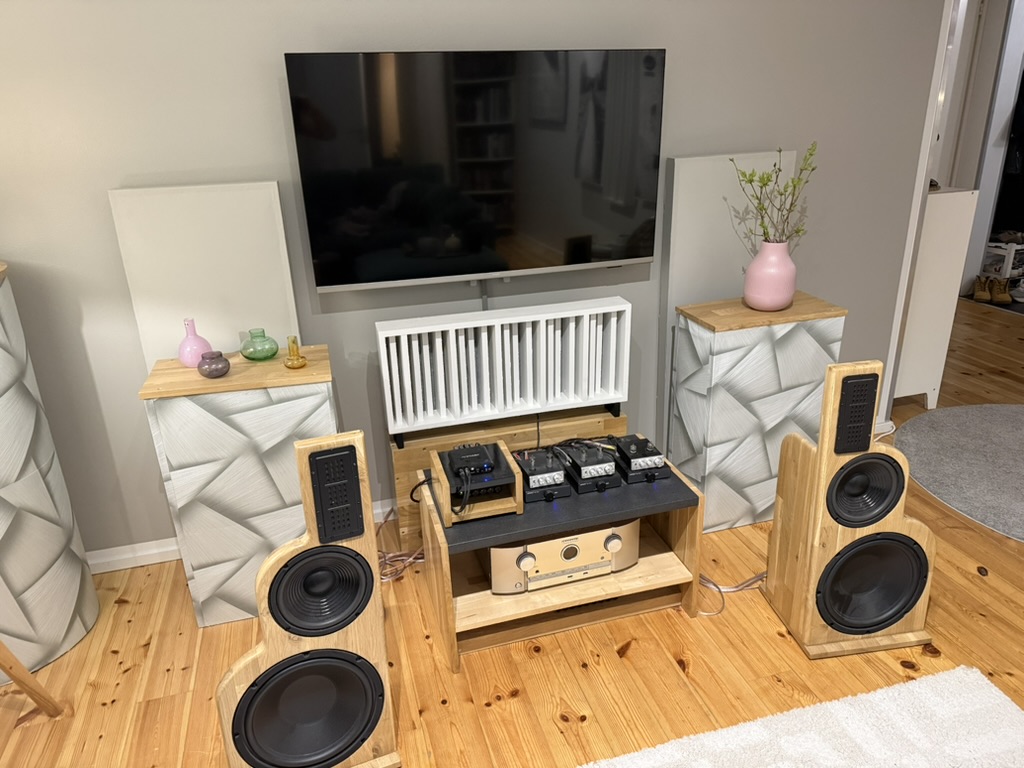
AI has become part of all kinds of situations: from counting aquarium fish to designing a hi-fi system, from calibrating a pH meter to building a company website. The biggest change is not any single trick, but the way I now approach problems.
AI did not enter my life as one great revolution.
It first arrived through small questions.
Could you compare these options?
What does this measurement result mean?
How should this be built?
Can you identify this device from the picture?
Then the questions began to change.
I was no longer asking only for information. I began asking AI to interpret images, assess videos, understand technical systems, design solutions and build them with me.
At some point, I realised that ChatGPT was no longer merely a more versatile search engine for me.
It had become a thinking partner.
The same tool, completely different problems
When people talk about AI, the discussion easily focuses on big themes.
We talk about disappearing jobs, automation, major IT projects and innovations that transform entire industries.
These are important topics, but based on my own experience, the impact of AI appears somewhere entirely different, at least at first.
It appears in small moments.
In situations where I would previously have searched for a manual, browsed discussion forums, called someone more knowledgeable or postponed the whole matter.
Now I can take a picture, describe the problem and start working it out immediately.
A pH meter in the morning
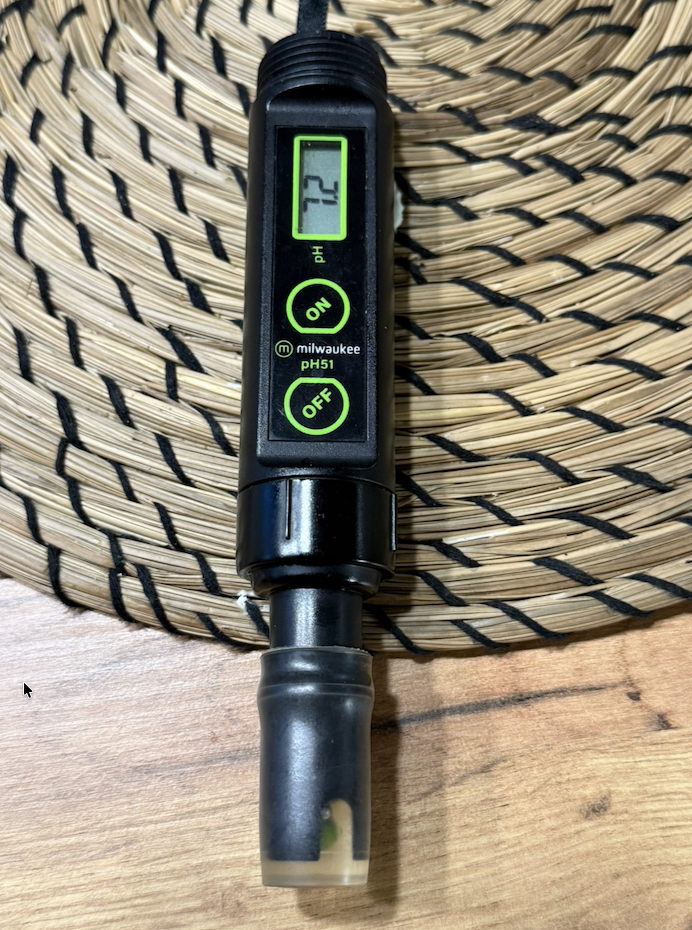
One morning, I had an aquarium pH meter in front of me.
It had recently been reading slightly too high, so I had cleaned the sensor, kept it in storage solution and finally placed it in a pH 7.0 calibration solution.
The device still needed to be calibrated.
The problem was small but practical: where was the adjustment made?
I took a picture of the meter and sent it to ChatGPT.
From the image, the device was identified as a Milwaukee pH51 meter. A second image revealed two adjustment screws and markings that referred to the pH 7 and pH 4 calibration points.
I could continue without searching for manuals or comparing different model versions.
AI did not, of course, calibrate the meter for me. I prepared the device, made the adjustment and checked the result.
But AI quickly brought me to a point where I knew what I was doing.
Moments like these have changed the way I solve problems.
Previously, my first question might have been:
Where can I find the manual for this?
Now it is often:
What can we infer from this image?
Counting aquarium fish from a video
Breeding aquarium fish presents problems that may not have a ready-made manual.
One of them is estimating the number of fry.
When a tank contains a large number of small angelfish fry, counting them by eye is difficult. The fish move, swim behind one another and constantly change position.
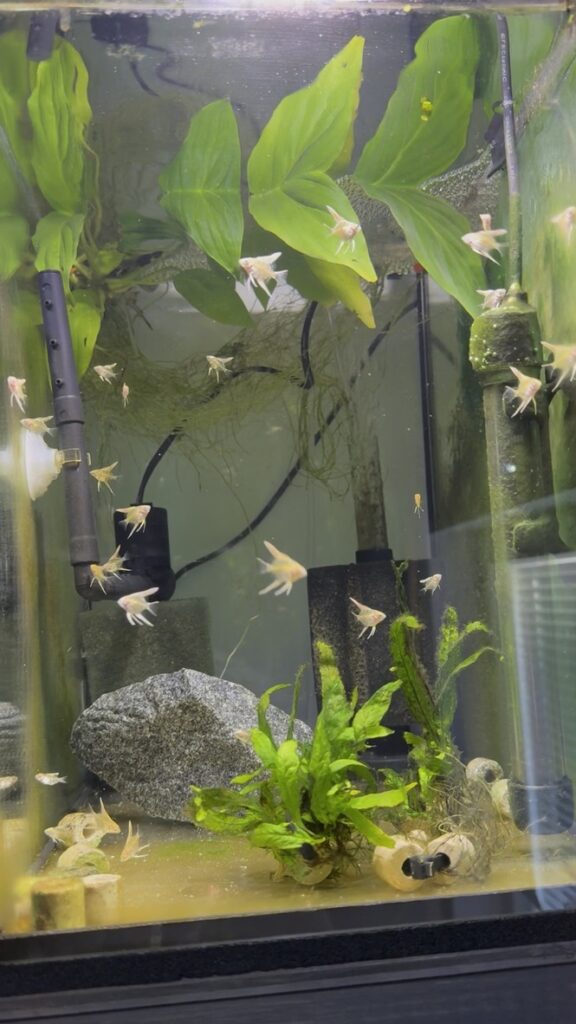
A single image can provide a rough idea, but a video reveals more.
Using video, we have estimated the number of fry, examined their movement and feeding behaviour, and followed the development of their colouring.
AI’s estimate in a situation like this is not an absolute truth. Counting moving fish always involves uncertainty.
Even so, it can provide a much better starting point than a quick visual guess.
More importantly, the video can be examined from several perspectives:
- approximately how many fry are in the tank
- whether they are distributed evenly
- whether they appear to be feeding actively
- whether there are visible differences in size
- how their colouring and fins are developing
- when the available space is beginning to become too small
AI does not replace the breeder’s experience.
It helps direct attention to the right things.
A hi-fi system is more than a pile of equipment
Another completely different application is hi-fi.
I have spent a long time designing and building different loudspeaker solutions, room acoustics and electronic room correction. In projects like these, an individual question is almost always connected to a larger system.
Loudspeaker placement is affected by factors such as:
- the dimensions of the room
- the listening position
- reflections from the walls and ceiling
- the directivity of the drivers
- crossover frequencies
- delays
- the characteristics of the amplifiers
- MiniDSP settings
- measurement results
A technical answer to one individual point may be found quickly. The more difficult part is seeing how the solution affects the entire system.
That is precisely where AI has been very useful to me.
We have been able to examine loudspeaker structures, compare different implementation methods and consider how acoustic solutions, DSP settings and physical placement affect one another.
Sometimes AI acts as a calculator.
Sometimes as a critic.
Sometimes it helps put into words a problem that I have already noticed but have not yet been able to define precisely.
Sometimes the most useful question is not:
Which crossover frequency should I choose?
But:
What are we actually trying to correct with this adjustment?
This distinction matters.
The first question seeks a number.
The second seeks understanding.
AI does not need a predefined box
People tend to divide their expertise into separate areas.
Work matters go into one box.
Hobbies into another.
Technology into a third.
Creativity into a fourth.
From AI’s perspective, these boundaries are not as rigid.
Calibrating a pH meter, counting aquarium fish, designing a hi-fi system and building a website may look like completely different tasks on the surface.
Yet they involve many of the same stages:
- identify the problem
- collect observations
- compare alternatives
- form a hypothesis
- test the solution
- evaluate the result
- adjust the direction
AI’s strength is that the same conversation partner can participate in all of these stages.
In the morning, it can help identify a calibration screw.
During the day, it can interpret a loudspeaker measurement.
In the evening, it can help design a company website.
The tool does not need to change every time the subject changes.
Small questions can lead to large projects
Using AI often starts with something very small.
You ask one question.
You receive an answer.
You ask a follow-up question.
Then you realise that the same matter could be developed further.
This has happened to me several times.
An individual technical problem has grown into an entire plan.
The plan into a prototype.
The prototype into a working solution.
For example, building my own Mac application did not begin with a decision to become a software developer.
I had a practical need to monitor the computer’s temperatures, memory usage and other system information more effectively.
The need led to a conversation.
The conversation led to a specification.
The specification became an application built with Codex.
This demonstrates one of the most interesting effects of AI.
It shortens the distance from an idea to the first experiment.
Previously, many ideas might have stopped here:
This would be useful, but I do not know how to build it.
Now the next thought can be:
Let’s first see how far we can get.
AI can both increase and conceal competence
AI also carries a risk.
When answers arrive quickly and the instructions appear convincing, users may begin to trust them too much.
This is especially important in technical, medical, legal or financial questions, where incorrect advice can cause real harm.
AI can identify a device incorrectly.
It can interpret an image incompletely.
It can suggest a solution that is technically possible but poor in practice.
It can also write with complete confidence about something it has misunderstood.
That is why using AI does not remove the need for human judgement.
It makes that judgement even more important.
A pH meter image may show two adjustment screws. I still need to understand which one is being adjusted and why.
A new crossover frequency may be suggested for a hi-fi system. I still need to measure, listen and evaluate the result.
The number of fish may be estimated from a video. I still need to account for how many individuals may remain hidden.
An AI answer is not the end of the process.
It is often the beginning of a new check.
I did not get all the answers – I found a better way to ask
The value of AI is easily measured by how many things it can do.
For me, the greater change has taken place in how I approach things.
I have learned to break problems down more effectively.
To describe the starting point more precisely.
To explain what I have already tried.
To ask for alternatives instead of a single answer.
To ask for reasoning.
To request risks and counterarguments.
To pause occasionally and review the bigger picture.
A good conversation with AI does not arise from a person writing one perfect prompt.
It develops step by step.
Just like a good conversation with another person.
The first answer rarely solves the entire issue. It helps form a better next question.
Not an oracle, but a working partner
I do not regard AI as an all-knowing authority.
It makes mistakes, forgets things and can misunderstand a situation.
Nor do I think it replaces people.
A better description is a working partner.
A working partner that is available whenever a question, observation or idea comes to mind.
With it, I can:
- think out loud
- explore alternatives
- examine images and videos
- test assumptions
- build plans
- write and program
- return to an earlier stage and try again
A working partner has no objective of its own.
I have to bring the objective into the discussion.
A working partner does not carry responsibility.
I have to carry it.
But with good guidance, it can help me do more, learn faster and see possibilities where I previously saw only limitations.
Perhaps the greatest change happens unnoticed
The impact of AI may not appear as one major turning point.
You notice it only when you look back.
You realise that you have asked for help with dozens of matters you would never previously have considered suitable for AI.
The number of aquarium fish.
Calibrating a pH meter.
Loudspeaker placement.
MiniDSP settings.
Computer temperatures.
Website structure.
The company’s services.
Individually, these are small or medium-sized use cases.
Together, they form a much larger change.
AI did not only change the way I work.
It changed the way I face a problem.
I no longer begin by asking whether I already know how to do it.
I ask:
What can we find out about this – and what would be a sensible first step?