Check the video from the link: https://youtu.be/ANaRztlFaC0
A month ago, I was genuinely excited about this. I took a photo of a pH meter with my phone, gave the image to ChatGPT and asked: “How do I use this?” The AI identified the device, explained the buttons and showed me how to use it. Pretty impressive, right? At the time, I wrote about it as an example of how far the practical use of AI had already come.
Now, about a month later, it already feels old-fashioned.
Not because image recognition or creating instructions for using a device has become useless. But because I have already moved three steps beyond that myself. First, I asked AI for advice and did the work myself. Next, I asked AI to build a complete program for me. Now I give it the entire task.
And this is where things become genuinely interesting.
My living room currently contains a small hi-fi studio
I build hi-fi equipment in my spare time, and right now I am working on a pair of three-way active dipole speakers. A speaker is standing in the middle of the living room, surrounded by a measurement microphone, amplifiers, cables and a DSP box that handles the crossovers, delays, corrections and other signal processing between the drivers. The DSP is programmed with SigmaStudio.
There is just one small practical problem. I use a Mac, but SigmaStudio only runs on Windows. I solved this by digging out an old Intel MacBook Air, installing Windows on it and physically connecting it to the DSP hardware. My new Mac, in turn, controls that Windows machine lying on the floor through a remote connection.
Up to this point, this is still perfectly normal geeky hobby stuff.
Then ChatGPT Work and Codex entered the picture.
Three steps in just a few months
The first way I used AI was the familiar one: I asked, it answered, and I did the work. If something did not work, I took a photo, asked again and tried the next option. Even this accelerated the work enormously.
At the next stage, I asked myself a fairly simple question: why should I ask AI to tell me how to build the program? Why not ask it to build the program? I define the architecture, crossover frequencies, filters, PEQs, gains and the other functionality I want. The AI builds the whole thing and gives me a finished program.
For a while, even that felt quite advanced.
Then I realised that even there, I was still an unnecessary middleman.
Give it the objective. Not the task step.
This is the point where my own understanding of AI changed the most.
Work no longer just sits somewhere in the cloud telling me what I should do. It can work on my computer. That alone is a huge leap: AI no longer merely advises a human on how to use a computer. It can physically perform the actual work on the computer itself.
But in my case, the chain goes even further. Work operates on my Mac and uses the remote connection built into it to control another computer lying on my living-room floor. On the Windows machine, it uses SigmaStudio, builds the DSP program, makes changes and tests them. And the chain does not even end at that computer: at the other end of a USB cable sits a physical DSP box.
In practice, Codex is already inside my stereo system.
It builds the program, loads it onto the DSP, reads any errors, fixes them, writes a new version and tests again. I can sit beside it and watch the screen change as the work progresses.
AI is no longer, for me, a black box running somewhere in the cloud that I type questions to in a browser text field. It is on my Mac. It uses the Windows computer on my floor. It communicates with SigmaStudio. And at the end of the chain, it programs physical electronics through which my living-room speakers operate.
AI is no longer only online. It has entered the living room.
And to me, this is a far bigger change than a new chatbot version or a slightly better text generator.
At the same time, companies are still wondering whether they should try ChatGPT
My rough estimate is that around 80% of business decision-makers still have not properly understood what has happened during the past year. And an even smaller share understand how dramatically the pace of development has accelerated in just the last few months.
In the business world, people are still discussing whether documents may be given to ChatGPT. Should employees receive prompt training? Could it perhaps help write emails a little faster? Should we now create an AI policy and establish a working group to investigate the matter?
Meanwhile, I am sitting in my living room on a Sunday watching AI use two computers, build software, communicate with a physical DSP device and take the entire task towards a finished result.
That is quite a gap.
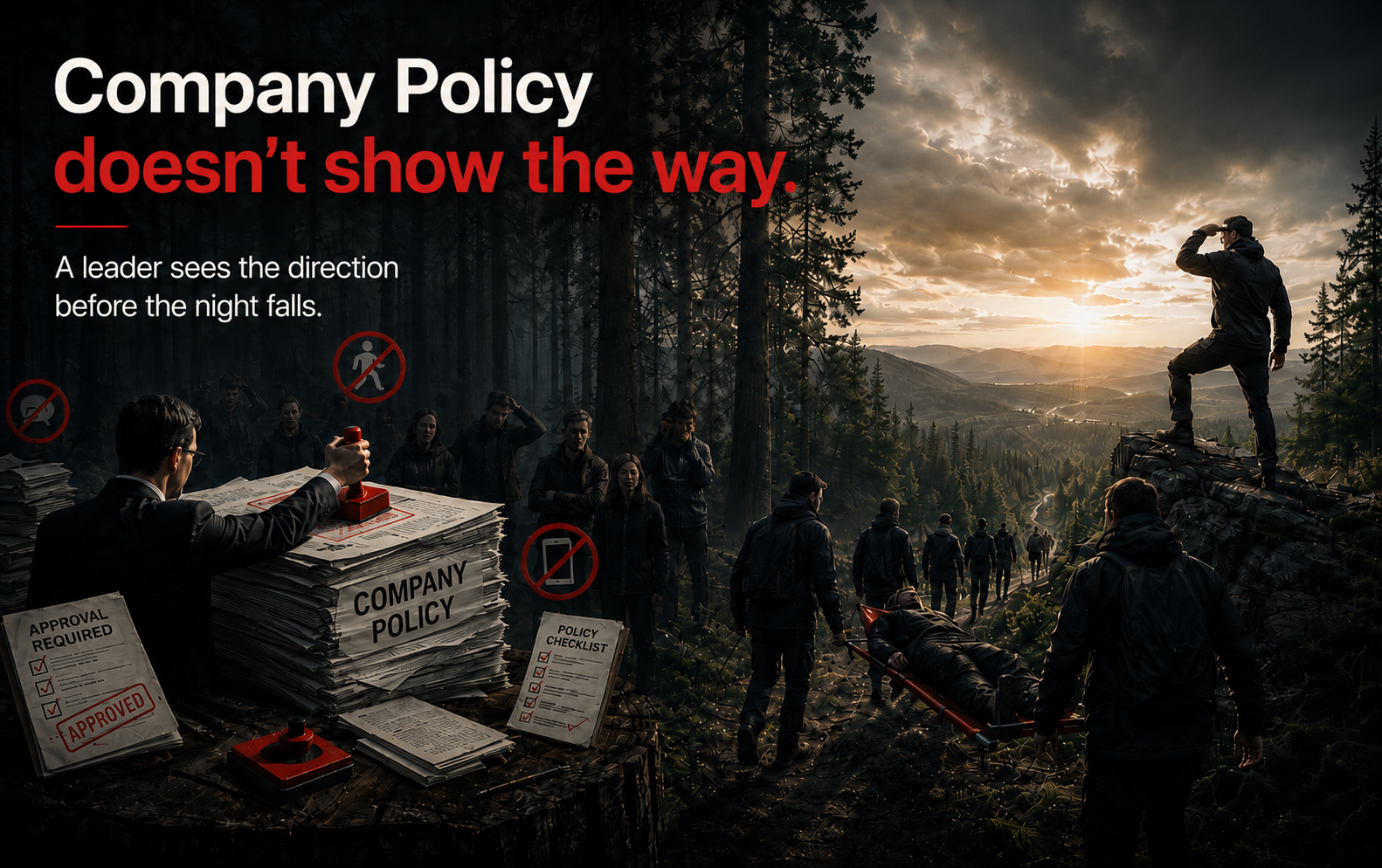
Dinosaurs in the business world have one defining characteristic: they call slowness deliberation.
And if someone is offended by the word dinosaur, I think that is beside the point in this discussion. Technology is not going to slow down while everyone waits to feel comfortable.
“Let’s wait six months” may not mean six months
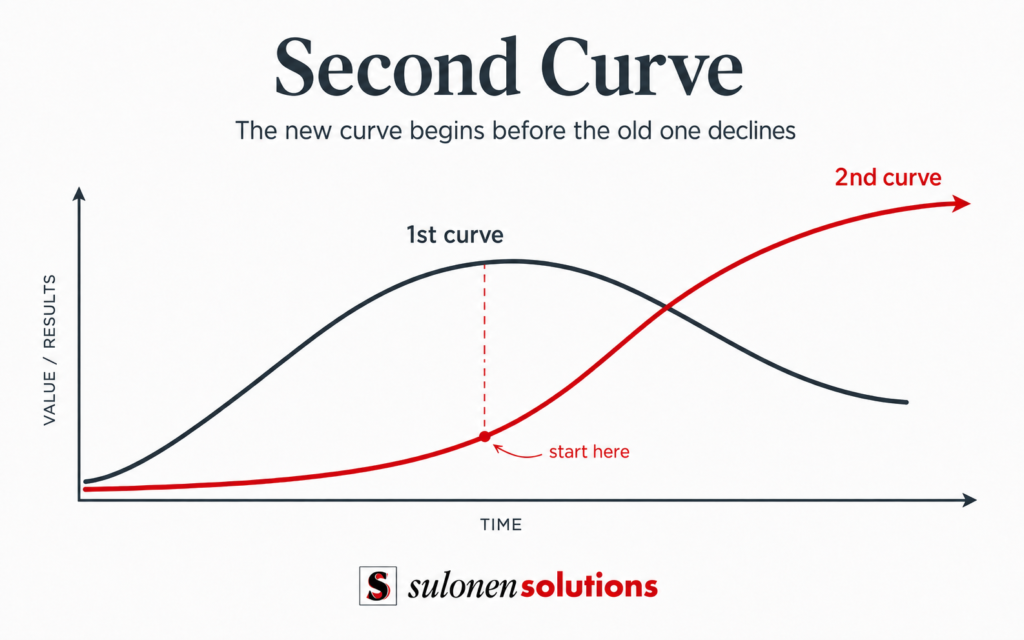
At least to my eyes, AI development does not currently look linear. New capabilities are built on top of previous ones, combined with each other, and suddenly something that felt advanced a month ago looks primitive today.
A month ago, I took a photo of a device and asked AI how to use it.
Now I give AI the objective, and it goes to the device itself.
If development continues in the same direction, “let’s wait a few more months” does not necessarily mean that you are only a few months behind. In terms of working methods, the gap can grow into years during that time. That is why I sometimes deliberately exaggerate by saying that some companies are already a couple of years late — and soon it will be ten.
Not on the calendar.
In capability.
This is not really an article about DSP
The DSP just happened to be the test subject this time.
The much more interesting question is what this means for companies. For a long time, we have asked: “How could AI help with this task step?” I think that question is already too small.
A better question is: “Why is a human still doing this task step at all?”
And then comes an even more interesting question:
Why give AI a task step when we can give it the objective?
At that point, we are no longer talking about using ChatGPT. We are talking about processes, organisations, leadership, productivity and competitiveness. We are talking about which parts of the work should be done by people and which can be assigned to a system capable of planning, executing, reviewing and correcting its own work.
This is what I believe companies should be discussing right now. Not next year. Not when AI is “ready”.
It will never be ready.
Tomorrow, it will be able to do more again.
The future is not coming. Right now, it is running on a Windows computer on my living-room floor.
And soon, even that will already be old-fashioned.