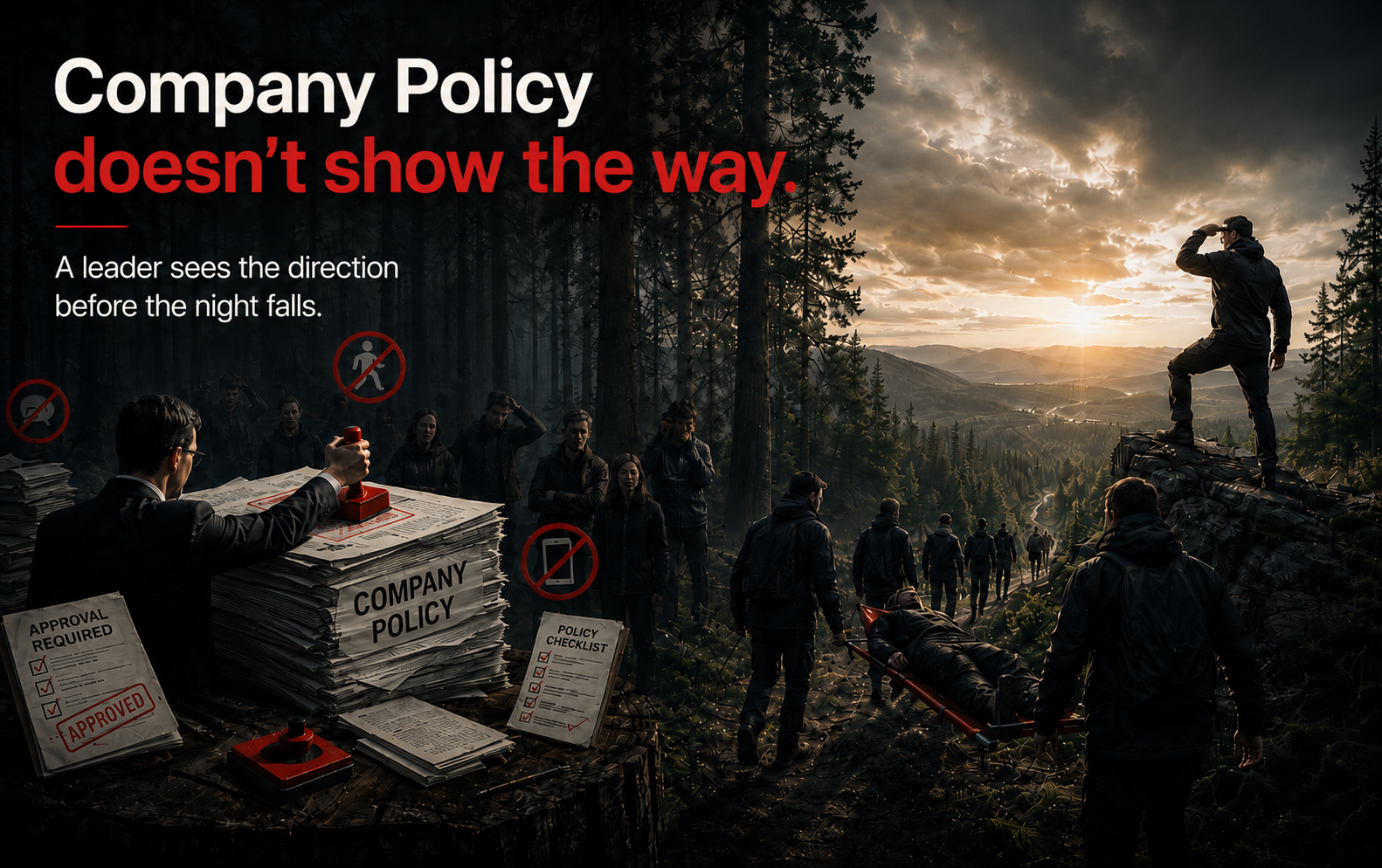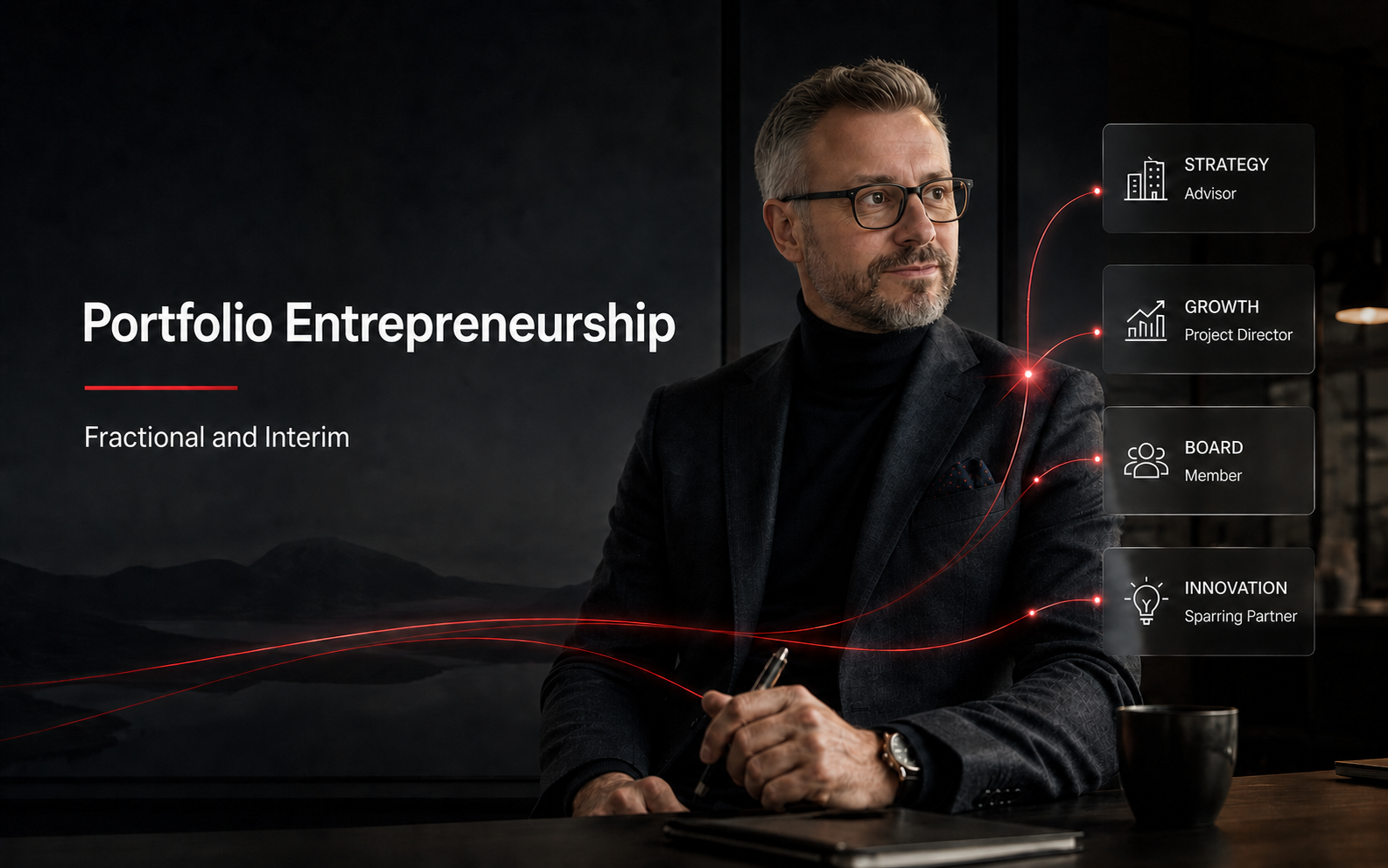
Management thinker Charles Handy was talking about portfolio careers decades before fractional executive, interim management and the gig economy became the workplace terms they are today.
Handy envisioned a future in which a person’s career would no longer necessarily consist of one employer, one title and one long climb up the organisational ladder. Instead, expertise would form a portfolio that could be applied across different roles, organisations and stages of life.
His ideas run through books such as The Age of Paradox and The Second Curve. Handy is also known for the concepts of portfolio career and shamrock organisation – the shamrock organisation. Today, these ideas seem astonishingly relevant.
When I began exploring Handy’s ideas more closely, I was struck by a realisation: This sounded all too familiar.
Apparently, I have been building a portfolio career for about 25 years. I just did not know what to call it.
One employer, one title, one career
The traditional career model is easy to understand. You join a company. You learn. You progress. You take on more responsibility. Perhaps you change jobs once or twice. Eventually, you rise as high as possible in the organisation and enjoy the security that comes with a long career.
For many people, it is undoubtedly an excellent model.
Not for me.
By nature, I am fast-paced, productive and efficient. I quickly become enthusiastic about new and interesting things – and when I do, they can easily command all my attention and resources. I want to see things happen. Preferably quickly.
When faced with a difficult problem, my first thought is usually not:
Oh no, now we have a problem.
It is more like:
Right. How do we solve this?
And somewhere beyond the problem, I can often already see what comes next: a new solution, a success, an invention or an achievement. Difficult situations do not drain my energy. They generate it.
A long, secure career or a long, secure stretch of boredom?
I probably have a higher-than-average tolerance for risk. That does not mean I seek risk for its own sake. I do not need to go skydiving before breakfast. On the other hand, I do not place much value on the sense of security offered by a long, steady career if the other side of the scale holds slowness, boredom, greyness and the feeling that nothing is being developed any more. Security is not a very attractive reward if the price is stagnation.
This is also reflected in my CV. Over a career spanning roughly 25 years, I have worked for around ten companies. Typically, I have changed roles or companies every 2–4 years.
On paper, of course, that can lead to one quick conclusion:
That man does not seem able to stay put.
Exactly right. I cannot, if staying put means standing still.
But every significant move in my career has taken me forward: into something new, bigger, higher or more demanding. At the same time, my responsibilities, expertise and playing field have expanded. I have also run businesses alongside salaried employment. Looking back now, a fairly clear pattern begins to emerge.
I have not built a single career.
I have built a portfolio of expertise.
Charles Handy’s shamrock – a company is no longer made up solely of employees
One of Handy’s best-known models is the Shamrock Organisation, based on the idea that the organisation of the future resembles a three-leaf clover.
The first leaf consists of the company’s professional core: key leaders, specialists and other people whose expertise and responsibilities form the core of the organisation.
The second leaf consists of contractual expertise – external professionals, service providers and specialists.
The third leaf is the flexible workforce, used according to need and circumstance.
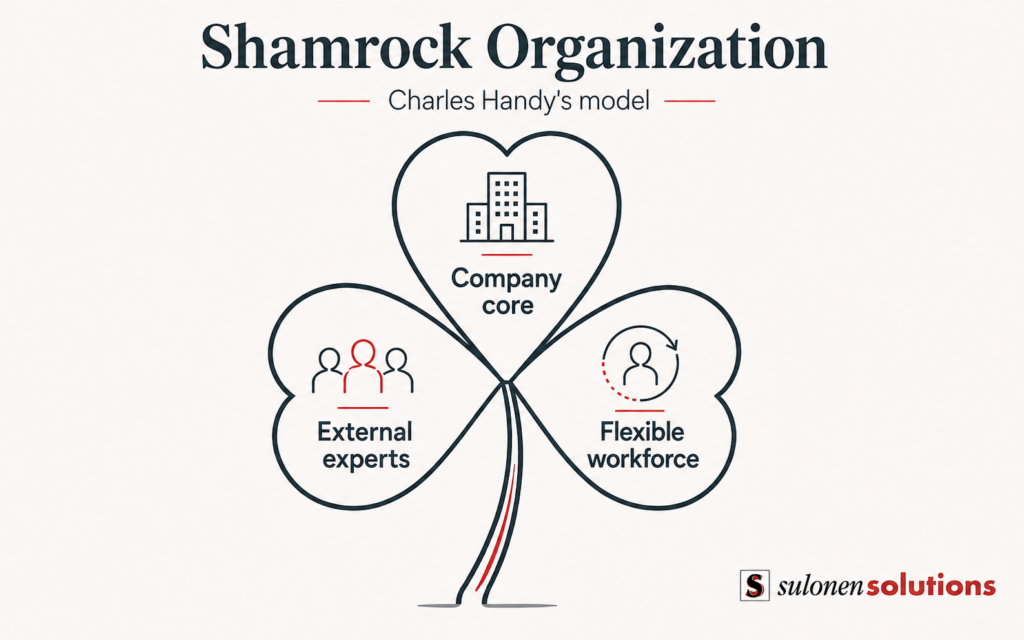
Handy was therefore describing an organisation that no longer needed to retain all its expertise permanently on the company payroll. That sounds quite normal today. But the idea was first presented in the late 1980s.
And this takes us directly into the world of fractional and interim work. They should not be forcibly equated one-to-one with the second leaf of Handy’s shamrock – today’s operating models have evolved further and their boundaries overlap to some extent.
The basic idea is still the same.
A company does not need to employ all the expertise it requires.
It needs to have access to the right expertise when it is needed. That is a huge difference.
A portfolio does not mean a random collection of gigs
Portfolio entrepreneurship can easily be misunderstood. A little consulting here, one project there, a couple of board positions, one training day and something else that someone happens to pay for. That is not a particularly good portfolio. It is a desk that no one has tidied.
Find a Fractional’s material on portfolio careers for senior executives makes an important distinction here: a strong portfolio is not a collection of random assignments. It should be built around a clear professional value proposition. There should be a recognisable common thread running through the different clients and forms of work.
This idea resonates with me. From the outside, my portfolio may look very broad:
- Freight forwarding.
- Logistics.
- Business management.
- Sales.
- Marketing.
- Processes.
- Systems.
- Business development.
- Change management.
But they are not separate, unrelated boxes. The common denominator is solving business problems.
- Where are we now?
- Why are we here?
- Where do we need to get to?
- What is stopping us?
- And what is the first thing we do on Monday morning?
That is my common thread.
Fractional does not mean half a leader
The term fractional executive is still relatively unfamiliar in Finland. The word fractional refers to a company using only part of an executive’s capacity. For example, a company might engage a Fractional CFO, CMO, CTO or Development Director for one or two days a week.
But this is the most important point of the entire model: Capacity is fractional. Responsibility is 100%
This is precisely where Find a Fractional draws the distinction from conventional consulting. A consultant usually examines the situation and recommends a solution. An adviser challenges, coaches and contributes expertise to decision-making.
A fractional executive becomes more closely involved in the organisation. They participate in its management. Make decisions. Set priorities. Direct people. And take responsibility for ensuring that something actually happens.
This suits my way of thinking far better than classic consulting. I find it hard to imagine standing on the sidelines while a client has a problem, writing a 46-page PowerPoint about it and then walking away. I want to see what happens next. Better still, I want to help make it happen.
What about interim?
Interim is a close relative of the fractional model, but its purpose is slightly different.
An interim executive usually joins a company for a fixed period and commits substantially more time – sometimes effectively working full-time. The reason might be a sudden leadership gap, a corporate crisis, a major transformation, an integration, a turnaround or some other phase in which an experienced leader is needed immediately, but there is neither the time nor the desire to make a permanent hire.
In a fractional arrangement, a company buys a share of an executive’s capacity on a longer-term basis. In an interim arrangement, it often buys almost the whole man or woman for a fixed period.
In both models, however, the essential element is action. Not merely giving advice. That is precisely why I believe these two models fit well within the same portfolio.
At one company, I might work intensively in an interim role for a few months. At another, the assignment might be a long-term fractional role one day a week. At a third, I might solve a clearly defined commercial or operational development challenge.
And at times, I can lecture, train, coach or write.
The same expertise.
Different dosage.
Perhaps my CV was not restless after all
When I look at my career through this lens, many things fall into place in a new way. I began in the automotive industry as a car mechanic. From there, I moved to my father’s freight forwarding company and began studying business. After that, my world began to expand rapidly:
Freight forwarding. International logistics. Sales. Management. Business development. Contract negotiations. Training.
Business trips across Europe, to China, Hong Kong and Turkey.
I have built two detached houses. Founded companies. Worked both as a salaried executive and as an entrepreneur. My personal life, too, has included several phases, homes and relationships. At no point, then, have I really lived along a single straight line. I have lived through a series of projects, phases and new beginnings. Many good outcomes that support one another. Failures too, but they do not break any straight “line of progress”. They serve as lessons and guide the next stages of my life in the right direction.
If you have never stumbled, you do not know how to get back up. If you have never failed, you do not know what to avoid. If you have never taken a wrong turn or made a single mistake, you have succeeded in sidestepping, circling around and avoiding the moments that truly matter. But that skill will not build a successful life or a finely tuned business. That mentality only dodges, hesitates and avoids responsibility. It fears the worst and hopes for the best. If you are afraid of slipping, you should not go outside in winter. But then you miss out on a great deal of life.
By accepting possible setbacks, failures and losses, we build the profile of a true winner. Every setback teaches us something. All of them can be overcome. And real expertise is only put to the test when something goes wrong, a process stalls and genuine doers are needed – not mere “yes-men” standing around with their hands in their pockets.
Looking back, my entire way of life has been something of a portfolio.
I can turn my hand to many things. At times, that has been a difficult trait in an environment where people are expected to fit into a single job-title box. In a portfolio environment, the same trait can become quite valuable.
Broad expertise does not mean having to do everything
There is also a danger here. When people are capable of many things, they can easily start to imagine that they should sell them all. They should not. I have a strong background in freight forwarding and logistics. It is the deepest area of my expertise and the environment in which I have spent much of my career. But over the years, I have also accumulated a great deal of expertise that does not really belong to freight forwarding.
Sales management is not freight forwarding.
Business strategy is not freight forwarding.
Building processes is not freight forwarding.
Leading an organisation is not freight forwarding.
Identifying the problem in an underperforming company is not freight forwarding.
These are business skills. That is why I do not want to limit my future clients to the logistics sector. Freight forwarding gives me a strong home field, but I must also be able to apply my expertise beyond it.
I have always liked out of the box thinking. In fact, the whole expression is slightly amusing. If the solution lies outside the box, why on earth is everyone still sitting inside it?
The Second Curve – the next curve must begin before the first one ends
Charles Handy’s The Second Curve offers another perspective on this. Put simply, the idea of the second curve is that organisations – and people – should have the courage to build the next phase before the old way has been completely exhausted. If change is only set in motion once the first curve is plunging downwards, there are usually already fewer options available.
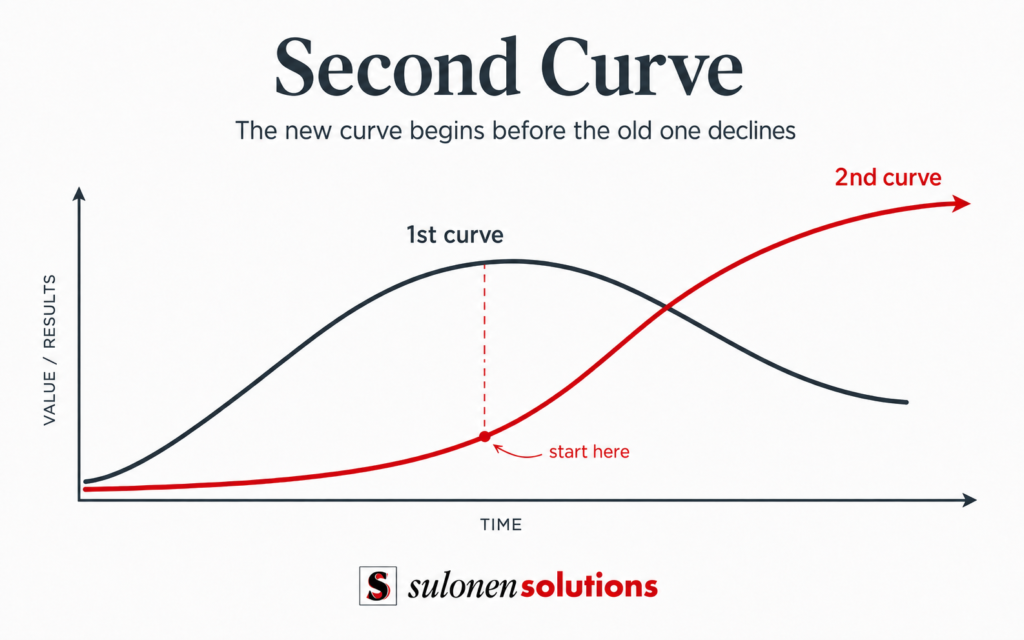
Throughout Handy’s thinking runs the need to challenge familiar structures and reinvent the future before circumstances force us to do so. I like the idea. For me, portfolio entrepreneurship is precisely this kind of second curve.
The first curve built my expertise. I was an employee. A supervisor. A salesperson. An executive. A CEO. An entrepreneur on the side.
Now the question is:
What happens if all that experience is no longer tied to a single organisation? What if the expertise accumulated over 25 years is used to solve the problems of several companies at the same time? To me, that is a far more interesting question than what title I might hold in my next job.
A portfolio is not an easier way to work
At this point, it is worth dispelling one potentially romantic notion. Portfolio entrepreneurship is not synonymous with freedom, a laptop and a cappuccino on a sunny terrace. Portfolio entrepreneurs have to build for themselves the machinery that an employer previously provided ready-made.
- Sales.
- Client acquisition.
- Pricing.
- Contracts.
- Administration.
- Calendar management.
- Risk management.
- Personal visibility.
And above all, securing the next assignment while taking proper care of the current ones.
Find a Fractional also highlights fluctuating income, the differing demands of clients, continuous business development and the danger of accidentally combining several fractional roles into one impossible 120% working week. A portfolio must therefore be managed like any other business.
This does not frighten me. Quite the opposite. There is a game in it. And I like games with lots of moving parts.
One career or an entire portfolio of expertise?
Perhaps the biggest change ultimately takes place in one’s own mind. In traditional working life, a person asks:
What am I?
- A CEO?
- A Sales Director?
- A freight forwarder?
- A consultant?
- An entrepreneur?
With portfolio thinking, the question changes.
What do I know how to do, and what can I achieve?
To me, that is a much better question. I do not have to choose just one box. In one situation, I can be an interim executive. In another, a fractional Development Director. In a third, someone who builds sales. In a fourth, a coach. In a fifth, a trainer.
The role changes. The core expertise does not.
And perhaps that is precisely why the whole idea of portfolio entrepreneurship feels exceptionally natural at this point. I am not building an entirely new career for myself. For the first time, I am consciously assembling the pieces of the career I have already built.
Portfolio entrepreneurship, then, is not an escape from permanent employment for me.
It is a way to put 25 years of experience to work more effectively.
Perhaps, in the end, I did not switch from one career to another. Perhaps I simply stopped trying to fit myself into a single job.
P.S. In Finland, Pia Kiviranta is a strong advocate for these ideas. Her content and services are also well worth exploring: https://piadotsinterim.fi
Background and sources
- Charles Handy: The Age of Paradox
- Charles Handy: The Second Curve – Thoughts on Reinventing Society
- Charles Handy’s thinking on the Shamrock Organisation and the portfolio career
- London Business School: The Shamrock Organisation
- FindaFractional: How to Build a Portfolio Career as a Senior Executive